Brand Drift: Why Your Business Has Outgrown Its Brand

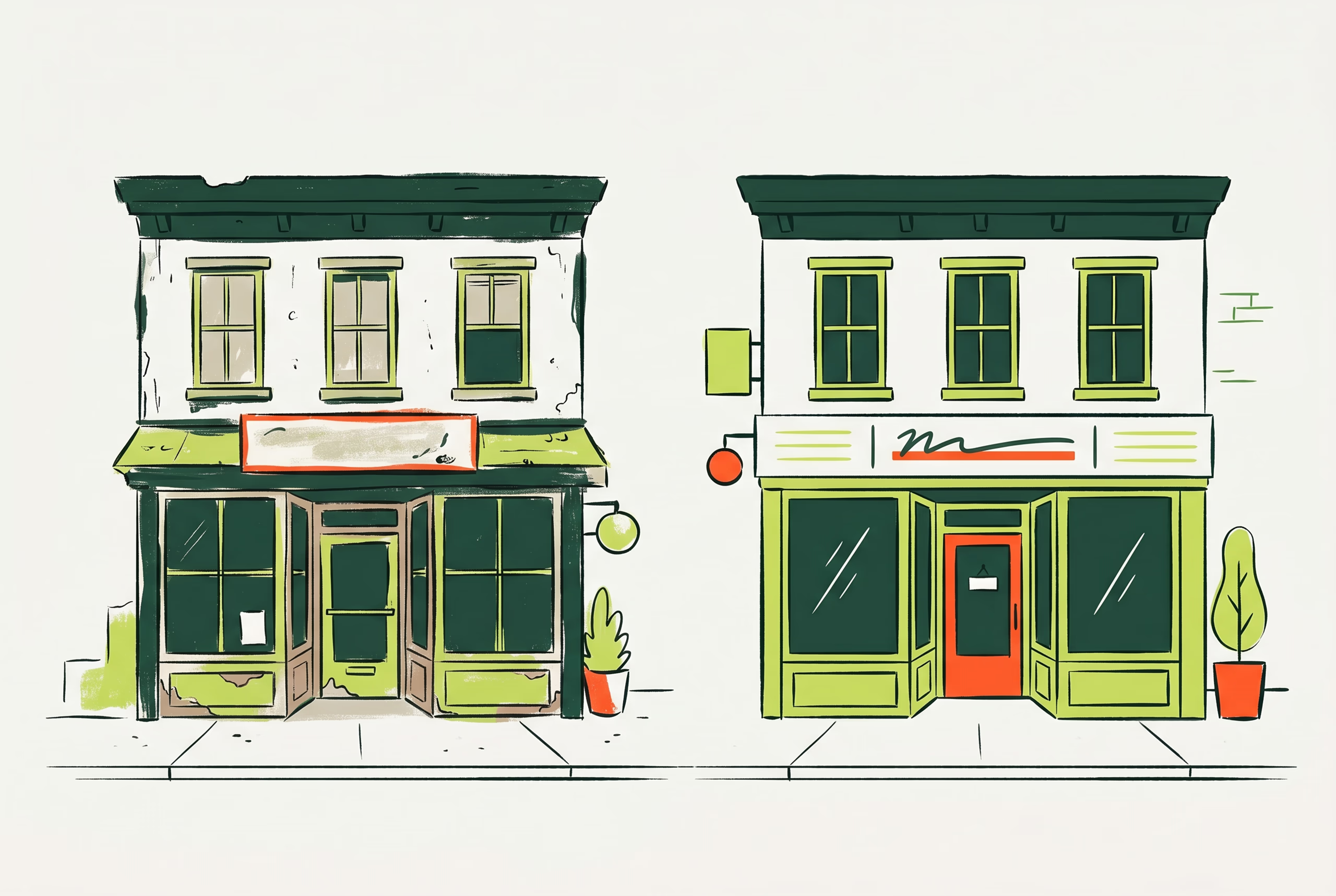
Table of Contents
There's a frustration that shows up a lot in service businesses. Real estate, development, finance, professional services. It sounds like this: "People don't know what we do."
It's a specific kind of stuck. You know how good your work is. Your clients know. But getting in front of the right people is the hard part. If you could sit down with them and walk them through everything you offer, it would be easy.
Sometimes the cost of a misaligned brand is more obvious than that. One client lost a business to a competitor for a service they actually offered. Their own customer didn't know. The brand wasn't doing its job. And it cost them.
What brand drift actually is
Here's what usually happens. Your business grows. Your services get better. You hire better people. Your work improves across the board. But to the outside world, it still looks and sounds like it did 3 to 5 years ago.
That gap—between who your business is today and how it comes across—is brand drift.
Think about who you were five years ago. You've learned things. Your perspective has shifted. You'd probably describe yourself differently. Businesses are the same. They evolve. And the brand doesn't always keep pace.
Why it happens
Drift doesn't happen because you're careless. It happens because you're busy. Growing the business. Improving the work. Helping clients. The brand gets left behind by default, not by choice.
And there's a practical reason branding gets pushed to the bottom of the list. Updating a brand is no small task. Depending on your business, it can mean new signage, vehicle wraps, updated touchpoints across the board. Significant investment. So before you tackle that, you focus on marketing and getting the word out. You hire an inside sales agent. You start a podcast. You post more on social. It's only once you've run into enough friction that branding becomes noticeable and therefore a real consideration.
A business that never changes has no chance of drifting. Brand drift is a symptom of growth.
The instinct and why it's usually wrong
When you finally decide to do something about it, the first instinct is usually: start from scratch. New logo. New website. Rebuild from the bottom up.
Sometimes that's the right call. But often it isn't. Starting over means throwing out years of equity, recognition, and foundational elements that are still doing work. That's chasing change for change's sake.
A better approach
Brand alignment starts from a different place. Instead of asking "what should our brand be," it asks "what is your business actually like today, and is your brand reflecting that?"
Think of it like a suit. When you get a suit tailored, it fits perfectly. But over time, you change and it no longer fits right. If the suit still has good bones—good fabric, right style—you don't throw it out. You get it re-tailored. Fix the fit. Update the cut. Make it yours again. But if the style is completely wrong, or the occasion you need it for has changed, maybe it's time for a new one. One that actually fits who you are now.
Brand alignment does the same thing. Look at what's working. Keep it. Look at what isn't. Fix it. Look at what's missing. Add it. Start with the business as it exists today, then bring the brand in line with that.
Where to start
If this is resonating, you probably don't need to tear everything down. You can leverage the equity you've already built. Use what's working. Get rid of what isn't. Improve what needs improving.
Here's a simple starting point: write down what your business actually does today. Then look at how it comes across from the outside. What does a potential client see when they land on your website or come across a social post? Does it look like your business? Does it sound like your business? Or does it look and sound like where your business was 2, 3, 5 years ago?
If there's a gap there, that's brand drift. And it's worth closing.

